
SPOILERS!!
When the first trailers scouted across the internet skies and revealed the texture and codas of Steven Spielberg’s newest UFO thriller, this sky kid was not alone in assuming Disclosure Day would be a companion sequel to the 1977 masterpiece, Close Encounters of the Third Kind. Connective theories littered the inter-web highways like Anthrax poisoned cattle. A rolling midnight cloud somehow looked familiar and maybe the very British Colin Firth was actually the grown up Barry Guiler in charge of some UFO watchdog (because all southern toddlers grow up in Downton Abbey, naturally). Because Spielberg was older, this seven year old sky kid who was once greatly helped by E.T. – The Extra Terrestrial (1982) and its divorced family texture, just assumed Steven would be all homage and The Fabelmans nostalgia. For the man who has centred so much of his movie registry around the home – and the invasion of it – Steven Spielberg also knows to never tread warm paths. Don’t go backward. So, Disclosure Day doesn’t. And from that reveal onwards, it is one of the greatest tics of a significantly stunning work.
From the brutal opening shot completely devoid of magic and awe, Disclosure Day is a magnificent ride. Within three minutes it is clear that not only should Mr. Spielberg be given a Bond film (come on Amazon MGM Studios… you have the petty cash), but that he is experiencing a renaissance on a par with his first decade of filmmaking. After arguably twenty years of teal blue concept films and star vehicles for a director who works best when his star is actually just a vehicle, here Steven yields his best work since Saving Private Ryan (1998). After Minority Report (2002), Catch Me If You Can (2002), War of The Worlds (2005) and War Horse (2011), The Post (2017) marked a curious second contact with the dramatic momentums and underlying American implications of Jaws, (1975), The Sugarland Express (1974) and Close Encounters (1977). It was also a film from a director who had found his opinion again. And then comes his second Shark movie, West Side Story (2021). Arguably a kinetic improvement on the Robert Wise and Jerome Robbins original, it was less a remake and more a dynamically-shot reminder that no-one – no-one – understands the language of mainstream cinema more than Steven Allan Spielberg.
There is a kinetic brilliance to Disclosure Day. Most modern cinematic darlings would take two minutes and six showboating cuts to convey a beat of story. Spielberg can advance a plot in three seconds with a moving reflection bouncing off a car door and that Sugarland and Jaws tic of piling up layers of fevered dialogue to create a cacophony of Americana, human frailty and panic. We are already late to the plot when the film starts and we are certainly pulled (brilliantly) out of events too soon as the credits hit. And at the heart of this sublimely effortless momentum are two British stars navigating a simple cat and mouse road chase – that even uses Goldie Hawn’s son Wyatt Russell to cinematically remind of the similar The Sugarland Express. In a Stranger Things and The Boroughs era where discovering the science-fiction at stake can take up hours of future-touted jeopardy, here is a film that has to back explain what you have already missed.
‘I will not be your religion’
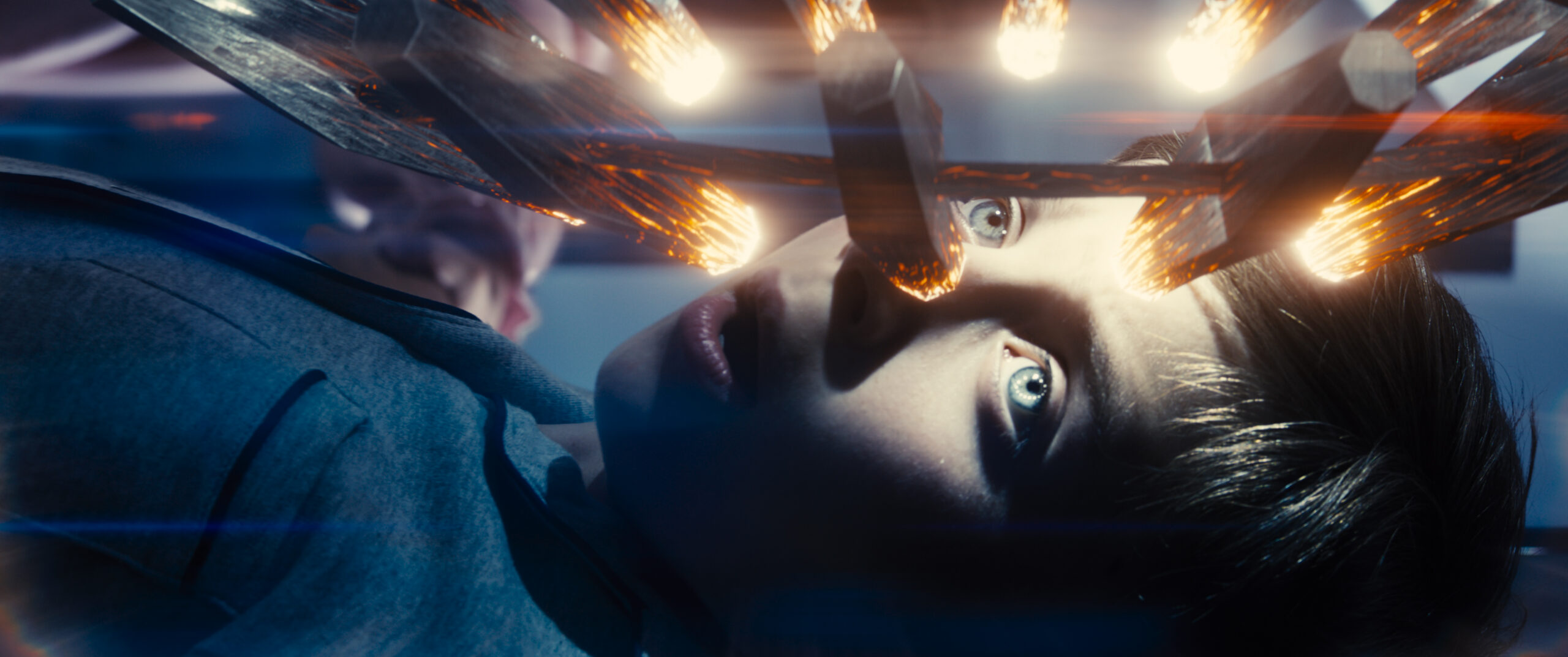
Spielberg’s early work was elevated by female protagonists often being the conscience and the questions of the piece. Disclosure Day is no different. As Josh O’Connor’s dewy eyed whistle blower and government pinball reminds of the Norman Rockwell everyman spirit of Roy Neary in Close Encounters – and echoing the blue collar decency of Spielberg’s first decade of cinema – it is Emily Blunt who here genuinely yields the best performance of her movie career. Her role as Kansas TV weather anchor Margaret Fairchild is fascinating, chilling, funny and wholly decent at all times. If Close Encounters, E.T., AI – Artificial Intelligence, War of the Worlds, and Indiana Jones and the Kingdom of the Crystal Skull are pinned to a sense of first contact, Disclosure Day is about forging a better connection with mankind itself. And it is Blunt and David Keopp’s screenplay that makes this work.

© Universal Studios. All Rights Reserved.
Aside from Pinocchio, The Ten Commandments and some Piggly Wiggly motifs, Close Encounters was not a nostalgia fest for late 1920s cinema. Likewise, Disclosure Day has zero pop culture referencing. News stations and news needs are all that are familiar here. In the way Spielberg locals once congregated on a midnight hillside to witness ice-cream coloured scout ships, here the community is a mobile phone. But people still hang around people to be on them as a shared experience of humanity. Any other director would have struggled to keep the modern day comments at bay.
As the collective news feed footage unfolds and unfurls more uncomfortably than perhaps the romantic awe of Close Encounters, Disclosure Day then pulls out its masterstroke. It is very much a companion piece to 1977 after all – with a last act beat that feels like some legacy full circle legacy… without actually piling too much mash potato onto its plate. A 1980s house full of 1970s beige fittings (but no movie posters) reminds of Dee Wallace and E.T. And when scientists wheel in medical and science kit, your eyes are almost scanning for Peter Coyote’s keys on a waist belt. Just like that 1982 extra terrestrial, there is comedy and warmth amidst a domestic invasion. A near set-piece involving fire trucks – in a film that deftly avoids action intervals – is joyously stupid as Spielberg gets his H.G. Wells’ The Invisible Man homage in and remembers his blue collar pluck. News footage of clouds rolling around medallion shaped motherships may or may not need to remind of Close Encounters. But when intimidating defence contract 4x4s approach stationary cars and their back windows waiting obliviously at level crossings, one cannot but remember Francois Truffaut’s Third Kind line, ‘this means something’. When Blunt recalls a childhood memory singing ‘One Day My Prince Will Come’ from 1937’s Snow White and the Seven Dwarves, suddenly the sounds of Pinocchio’s ‘When You Wish Upon a Star’ and the last act of Close Encounters are meant to be connective tissue. Roy Neary trying to explain maths to his 1977 kids with a boxcar stuck on a toy train set possibly inspires a near-brutal level crossing sequence and – maybe even – a quick train-bound John Williams cameo. And a famous 1970s poster tag line is all that is needed for a newscaster to sum up what is afoot.
‘Listen’
Spielberg once had Nixon and Reagan in the critical wings of his films. Now, a United States devoid of decency, compassion, the truth and science is the warning here. When found footage of US soldiers rounding up, caging and abusing crashed aliens is a wholly unpleasant beat, it is meant to feel like Schindler’s List. Or Minneapolis in January 2026. Disclosure Day has a lot of opinions scattered narratively around like Reese’s Pieces left in a redwood forest.
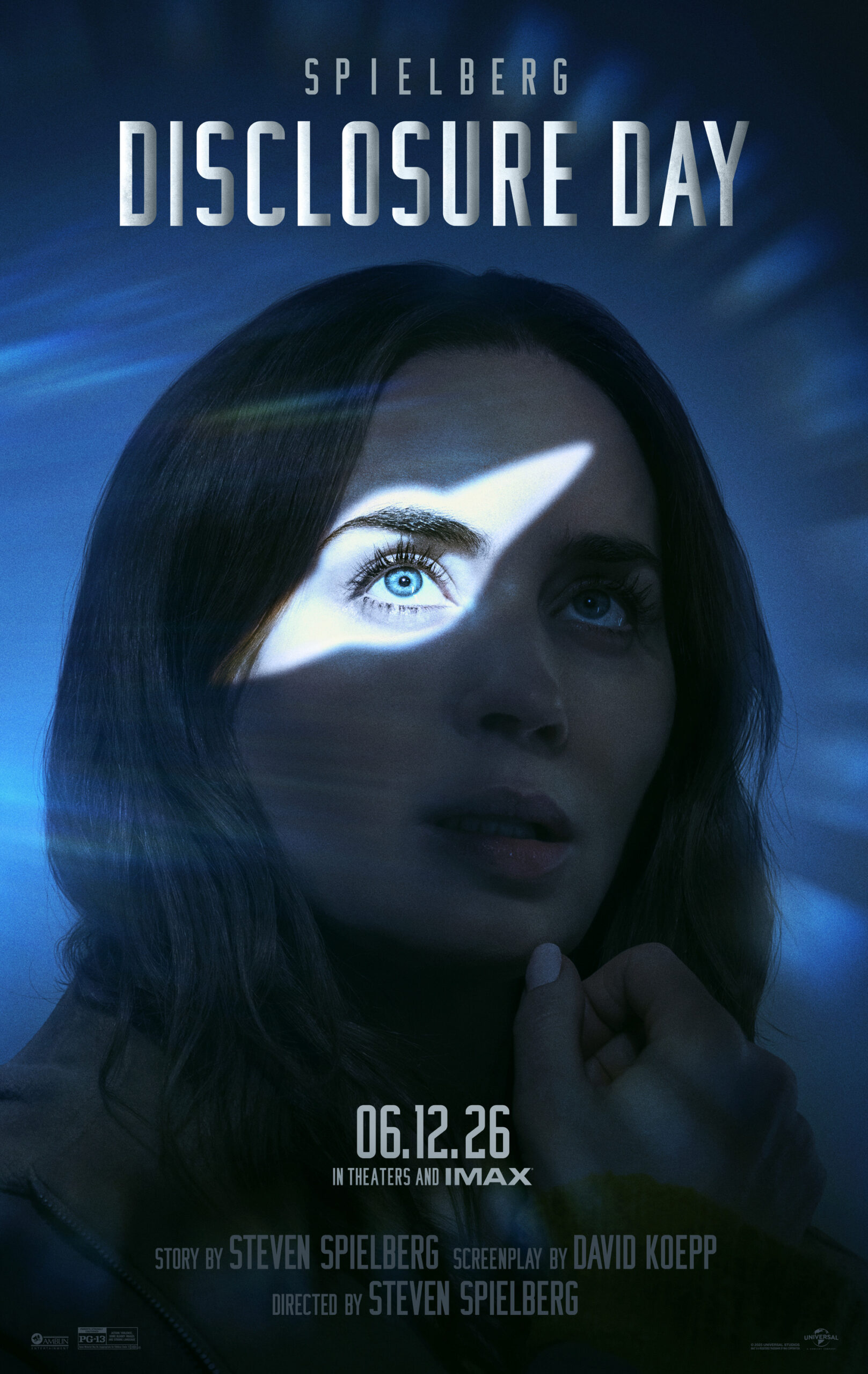
Emily Blunt is the emotional mothership of this quite affecting presentation of empathy. An America without the ability to welcome is way more dangerous than any H.G. Wells alien. One of the key traits of Disclosure Day is decency. This is a film replete with decent souls, decent humanity and decent decisions. And a somewhat great Colman Domingo at the heart of that. Here, The Man motif of the government and cover-ups of 1977 have a more cynical veneer. Governments are off-frame with defence contracts more pressing than science, mathematics and language. Perhaps Colin Firth’s kingdom of crystal lulls is overwrought and a burgeoning offscreen world crisis is not totally clear. Yet, this all matters less when you want to spend another hour in the company of Blunt, O’Connor and this film.
Mark O’Connell is the author of Watching Skies – Star Wars, Spielberg and Us