
SPOILERS
‘This was not the England he had heard about at school.’
King Zero
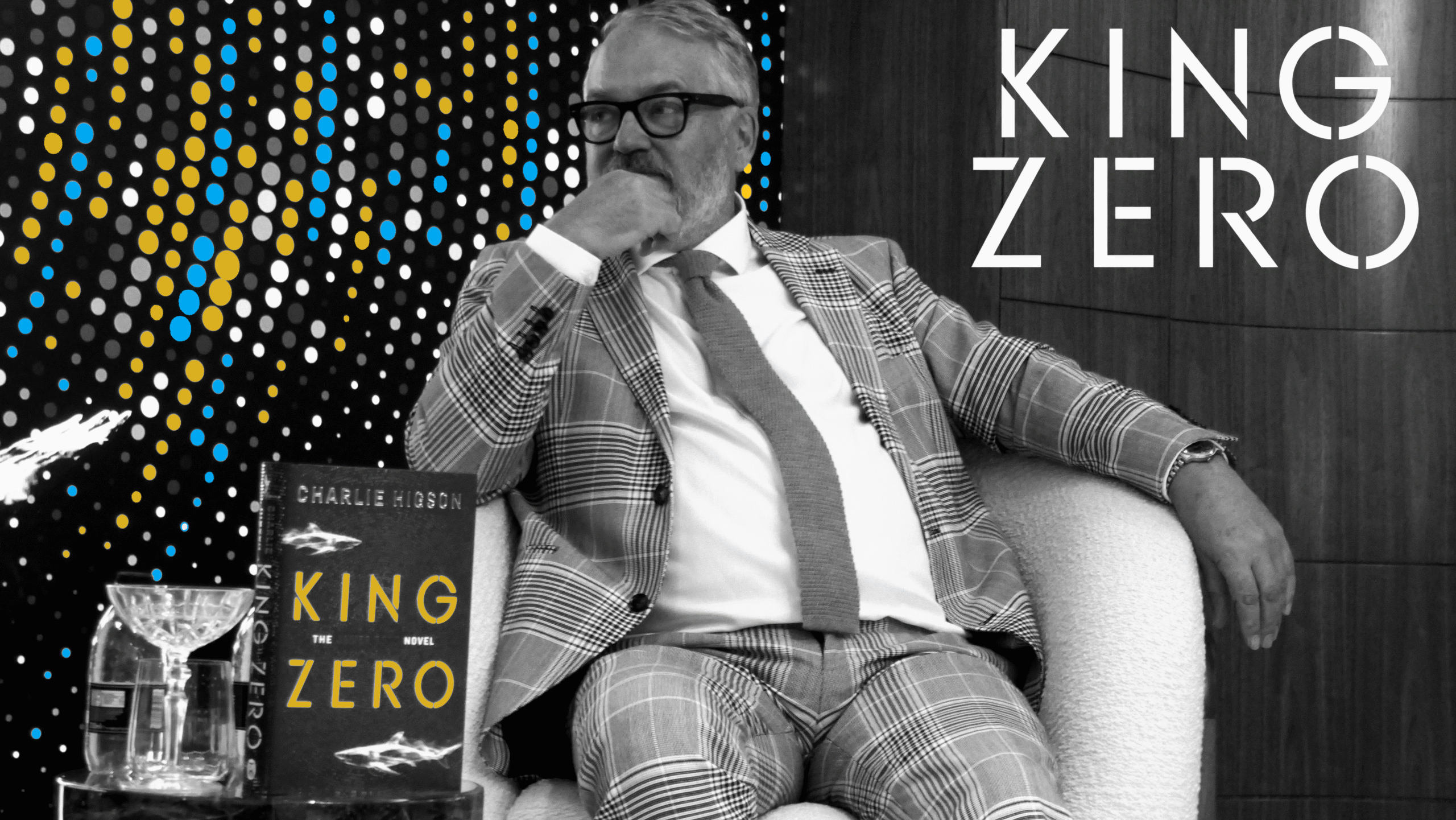
Charlie Higson is on a mission. He wants to make James Bond heroic, sexual, strange, and relevant again. Having already earned his literary 007 garlands with a much loved and critically respected Young Bond series (beginning with 2005’s SilverFin), Agent Higson was always destined to be awarded his adult licence to kill. In 2023, he teased a pre-title sequence of sorts when Ian Fleming Publications and the Literary Trust tasked him with the coronation novella On His Majesty’s Secret Service. It saw King Charlie – and his knowledge of English monarchy – jump at the challenge of bringing the new sovereign King Charles III and James Bond together for a short story of great prescient texture, zeitgeist wit, and modern day culture battles.
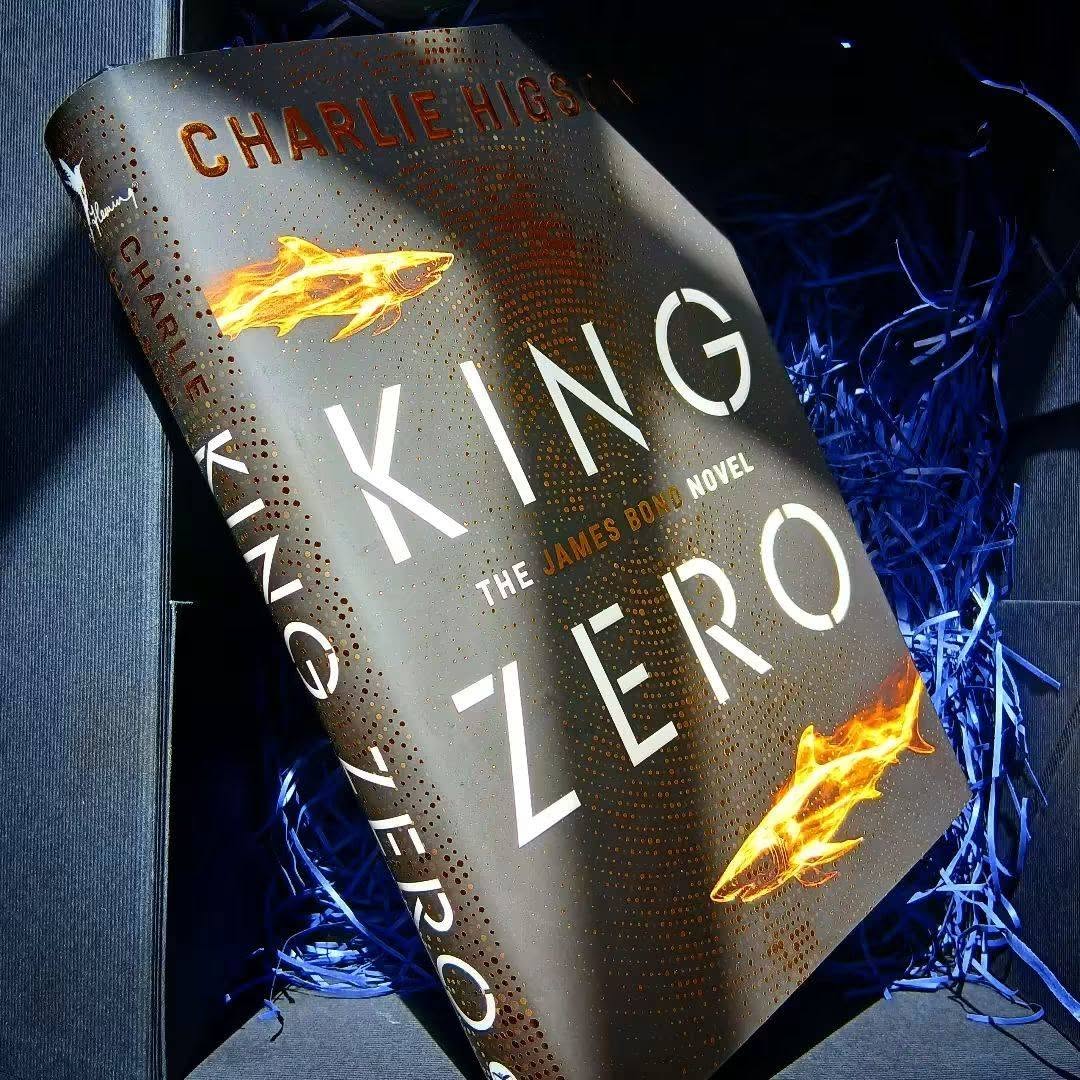
The third reign of Higson’s inevitable literary 007 tenure now anoints King Zero as the latest James Bond continuation novel. Published by Ian Fleming Publications and Penguin Michael Joseph, the new adventure sees the author reposition 007 for the late 2020s (whilst curiously retaining a striking and affecting schoolboy motif that marked his Young Bond books). King Zero pitches pop-culture’s favourite spy into a middle Eastern, energy crisis world of tech hacking, driverless cars, medical AI, nepo babies, tweaking billionaires, bigoted nationalists, useful drones, and complicated women. And sharks. Definitely sharks. Russia may be less prevalent in this adventure. But a Russian doll villainy motif dominates throughout.
‘James Bond felt a drearily familiar flush of weakness and disgust.’
King Zero
King Zero launches in a Roger Moore science lab – albeit a remote, tech-steered science lab with a chilling, brutally framed operation that soon goes very wrong. Since 2020 changed what the very phrase ‘remote’ means, here is a distant surgery showcase puppeted by dark forces and flanked by healthcare influencers and corporate rogues. As the headlines warn of AI, but citizens are still vague to the touted implications, Charlie Higson lays it brutally bare throughout. Already, he has his Ian Fleming scalpel firmly in hand as talk of stents, surgery and the frailty of the human condition overture the story in quite the giallo body horror opener. Very soon Commander Bond is en route to Riyadh and a dicey realm of self-driving cars, VR headsets and AI world-scapes. Immediately, he is a bespoke suit in a sandstorm of Barbie bucket hats, khaki dressed tech kids, arrogant inked torsos, Insta photos of cocktails and basement hackers. Faceless assassins are called ‘Nike’ and ‘Gucci’, hotel lobbies are clinically cold, a henchman called ‘Chimp’ sounds like an anti-women incel child, and the royal command lack of alcohol almost gives Bond a constant blood fever.
With Bond himself of course being such a king himself of cinema, film and pop-culture are always in the wings of this book. Bond’s former studio MGM gets an early reference. King Kong, Mad Max and Spaghetti westerns are all part of Higson’s dressing. Even Paul Thomas Anderson’s Oscar-winning One Battle After Another (2025) is arguably an influence on the physicality of the book’s action sequences, slow builds and peaked desert highways. The tropes of a Bond film itself are almost mocked as Higson deliberately and sometimes comedically speeds through the expected tics of 007. He knows Bond is now a genre that no longer has to keep presenting all of its beats at every turn to work.
‘He felt tension rising within him, ready to burst out. He had to make sure he controlled the release of energy.’
King Zero
King Zero is about implementing raw fists in a tech world. With a character and world so tied to a Cold War frieze and mid-century aesthetic, Higson cleverly and simply reminds how a digital paper-trail era is problematic for all spies. He calls for more ‘Cold War tradecraft’ as 007 just does not trust a tech-reliant kingdom. And when you add the cultural differences between James Bond of the British Empire and the shopping mall bling and oil-fuelled patriarchies of Saudi Arabia, suddenly the author is able to pare down the 2026 punctuation and remind of the old school ways of doing espionage… because the plot and hero needs them.
Higson deftly avoids draping his agent in next generation confusion. With the UK summer of 2026 barely over, Bond is mocking a London that has not engaged with air-con. He warmly picks up on the ‘stationary slut’ Moneypenny and her predilection for manila folders and metal binders in a digital age. Higson knows that the Bond Arriving beats of a 007 caper and the jet set glamour and opulence of his travel choices are now others Instagram posts. This is very much a James who was born in the early 1990s. The hero that almost invented secret earpieces now uses the same earbuds as the rest of us. The Bond genre that has such fun with SPECTRE boardroom meetings is now conducting Zoom meets. This Bond’s ‘M’ is thirty when the Berlin Wall came down. This is a 007 who knows about social media and platform streaming. He doom scrolls. He shops online – even if boss ‘M’ considers it ‘living in a digital hell’. He is up on the difference between Windows and windows. He goes to the gym. 007’s Spotify account is not just for his Adele and Lana Del Rey obsessions (or Bond fans’ raised and amused eyebrows at the artists 007 earmarks on Spotify). And how Higson’s Bond uses the music service for the job in hand is simple, cool and a direct throwback to wartime radio announcements, playlists and the station breaks of Fleming’s world. And an amused round of applause for that Higson beat about all of Bond’s Spotify choices having zero connectivity!
However, Higson does not trip our man James with adding too much modern-day detail. This is a Bond who also reads Agatha Christie. This is a Fleming-savvy spy who needs to swim and decompress, and who is mindful of Oscar Wilde.
With cinema Bond versus literary Bond forever married in pop-culture, Higson sprinkles nods to both. Even Bond creator Ian Fleming was mindful of the growing might of the Connery movies. So, in King Zero, Bond listens to Adele (Skyfall) and Lana Del Rey (007 First Light) on the gym treadmill. He is man of YouTube culture who makes Transformers quips about Saudi cars, quips at Chat GTP and makes TripAdvisor gags about bad reviews. His world also has irritating influencers and nods to Hollywood stars endorsing products (yep, Meg Ryan is referenced in a Bond novel).
Often Bond continuation novels are wholly faithful to the literary source anchor that is Ian Fleming. Here, Charlie Higson charters his own literary yacht. He fluently recalibrates, updates and modernizes the texture of Bond. This is a 007 whose school pals have been killed in Ukraine. He presents a literal family of villains but pins it to an Epstein-aware world of sexual abuse, dangerous boat parties and one baddie who may or not be the Ghislaine Maxwell of the piece. The vicious character of Malika certainly has Mrs Bates (Psycho, 1960) and Pamela Vorhees (Friday the 13th, 1980) energies. The tweaking Jackie St. Bride is every nepo-baby, ‘film producer’ wannabe clogging up the aisles of IMDB. And all the time, Higson is aware of the unpredictability of tech billionaires who have never been told ‘no’. He taps into the danger society of tax-evading, out of control film shoots in Saudi Arabia and the ludicrous irony of someone wanting to recreate a white-faced, old England… in the African Congo.
There is a lot of comment in King Zero. And exactly as it should be – the voice of the author today ever mindful of the voice of Fleming in the past. Fleming did not hold back so why should Higson? This is a dangerous world of bro incels and their venal brotherhoods. A hacker in the chain has created AI women for his screen savers. Fentanyl-dosed subordinates drift haphazardly around villain’s yachts. The queer world’s Ketamine is the new Bond world’s heroin. And both Higson’s Eton and a Young Bond teen world are still present.
After a wilfully Young Bond minded, surreal and era-jarring pre-title sequence of sorts is pinned to the centre of the book, the plot requires a subsequent humanisation of migrant boat crossing from French to English shores. The baton-like urgency of a James Bond story is here shifted to a Rogue One necessity of getting the villain’s plans into the right hero hands via a brave child, a dangerous migrant trek from Africa to Europe, and a Dover crossing. Higson knows full well that geo-politics has consequences. As do nostalgic patriots and self-anointed kings with AI lions on their social media who later form a rotting villainy that is reminiscent here of a Texas Chain Saw Massacre (1974) family supper night. It is a bold move. But James Bond should be bold. That is the point.
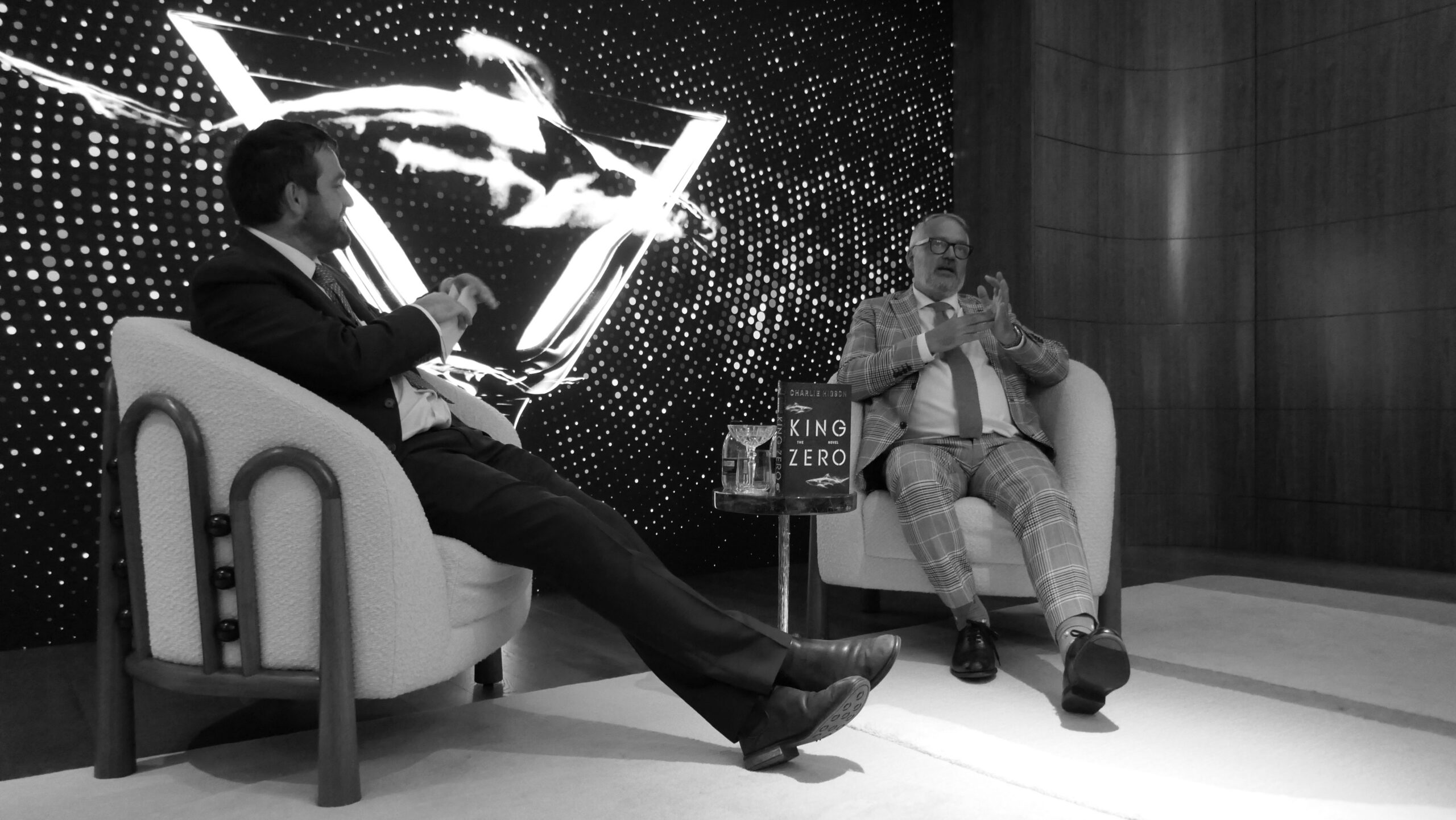
Photo / Mark O’Connell
Detractors and self anointed Fleming gatekeepers might step up to be heard. But this novel is not a sugary tin of Woke Zero. There is a decency to what Higson writes. And there is also a sense of caper and triumph. For this Bond commentator, one of the biggest goose bump beats in King Zero is when Moneypenny opens a car door in a Croydon street to bolster and save a plot point. It underlines Higson’s grip of character, the gravitas he has stitched into this work and the Bond genre itself.
Higson does not just remind of original Bond creator Ian Fleming and his attention to post-war detail. To Higson, getting the humanity of those details also matters. New Bond villains and their nefarious schemes are hard to nail. Here, Higson pins his baddies to culture war despots, a villain who has built his own ye olde English village and turned the green meadowed nostalgia of British pride into a Disneyland nightmare of ‘Mrs Dalton’s Tea Room’, and a fairground recreation of Eton (which, of course, takes Higson back to his Young Bond starting pistol). King Zero is a clever work that knows the dangers of fake ballrooms and fake facades barely masking desperate snobbery and one-upmanship (two key fascinations of Ian Fleming’s work). Higson calls them ‘angry patriots who are anything but.’
Away from solar flares and deserts, there is a darker, wholly prophetic depiction of villainy in King Zero. Influential tweed suited men supping their performative Spitfire Ale in old English pubs harking back to a green and pleasant England that never existed are the new Drax, Blofeld and Scaramanga. Higson is not wrong to focus in on the arrogant pretentiousness of Bond villains. It is how Ian Fleming originally forged the Bond project.
In 1977’s The Spy Who Loved Me, Roger Moore’s emerges on a beach in a Lotus Esprit in a wholly Union Jack celebration of a movie. In King Zero, those same flags are not welcoming or even celebrating the real Britain. A demonising of those stood on Dover pebbles waving their Union Jack and St. George flags is where King Zero’s perhaps bravest tic emerges. And Higson is right. A Bond novel should be as brave and outspoken as 007 himself. For a novel that is mindful of the current-day and somewhat bovine mis-use of the St. George’s flag, nothing is more visually evocative and telling than a red cross being knifed into Bond’s naked chest by a villain.
At a September 2026 King Zero launch in London I asked Higson what he is mindful of with his new villainy and – more crucially – what is the author concerned about in society. ‘I don’t like those elements that try to say, ‘this is what Britain is actually is and we need to return to it’ because its bullshit’, Higson firmly states. ‘I don’t like anyone trying to impose their idea of how the world should be or how rich it should be on the rest of us and our democratic process.’ He continues, ‘we are increasingly living in a world where democracy is being undermined’. He cites how all the tech bros ‘think we do not need governments and democracy. They’re just putting a brake on what we’re trying to do.’
Higson pauses. ‘It’s interesting that a lot of these modern, worldly people don’t seem to really care what happens to ordinary people. Whereas if you look back at the first wave of American millionaires who now in today’s money would be multi-billionaires – people like Carnegie and Rockefeller – they put a lot of money into social programmes and building museums and libraries and art galleries. Musk just wants to build rockets which are not going to be great monuments for society.’

Just as a mindful Ian Fleming was homing in on unchecked, post-war villainy and the dangers of moneyed men outgrowing their station, here Higson is zeroing in on what facets of modern life require a hero like James Bond to thwart. And snobbery, misspent wealth and a Britain that is losing its ability to be intelligent and compassionate are his concerns. And plot points. And all the time, the author’s personal grip and fascination with history, old monarchy and the foibles of Britain’s psyche dominate. For a character so tied to sex and seduction, Charlie Higson writes sex well. He finds the dirt lurking in clean opulence, and presents a red-blooded, horny James Bond mindful of new era sexual politics and MeToo warnings.
Charlie Higson wants to return Bond to a sadistic, kinky adult world with a whiff of surrealism and the bizarre. He calls and celebrates it as ‘some weird sex and violence’. In conversation, Higson reminds of the strengths and bold manoeuvres of the first Bond novel, Casino Royale (1953) where Fleming was ‘obsessed’ with stories of WW2 sexual tortures and brings that sense of adult sadism and investigation into his Bond writing. Higson suggests the sexuality of the first Bond novel ‘is an extraordinary sequence and very unexpected for a book published in 1953.’ He continues, ‘I think it is one of the reasons the book was such a sensation, and the relationships with the women in the books are often quite complicated. They come from abusive backgrounds and the relationship with Bond and the sex in the books is a big part of it.’
Higson is mindful of bringing to King Zero what he feels the more recent continuation novels and their authors have maybe ignored. ‘I felt that the writers hadn’t always gone into that area and maybe didn’t have the same psyche about this as Ian Fleming’ he notes. ‘I wanted to go into that area a bit more – that area of complicated, physical things.’
As the world’s headlines and cross hairs look to the 007th movie Bond, it is apt that Ian Fleming Publications and Charlie Higson have not only repointed James Bond for a new era. It is both a successful template and vital reminder of what Bond can be, should be and must be. His second book cannot come soon enough.
‘Even if he freed his fists, what good would they be against the digital world? It would be like punching a ghost.’
King Zero
King Zero is published in the UK now.
Mark O’Connell is the author of Catching Bullets – Memoirs of a Bond Fan and Bond, Queer Bond – The Fabulous Other History of a Spy.

With special thanks to Charlie Higson, Joel Richardson, Simon Ward, Ian Fleming Publications, Penguin Michael Joseph and the PR teams.


